Gone in August
In memory of Ukrainian artists and curators who have fallen on the front lines of the war against Russian aggression.

The past week proved tragic for the Ukrainian art world. On August 7, Maryna Hrytsenko, senior curator of the Halahan Regional Art Museum in Chernihiv, who had joined the Ukrainian army and served as a combat medic in the 3rd Assault Brigade of the Ukrainian Armed Forces, was killed in battle in the Kharkiv region while trying to save her comrades.
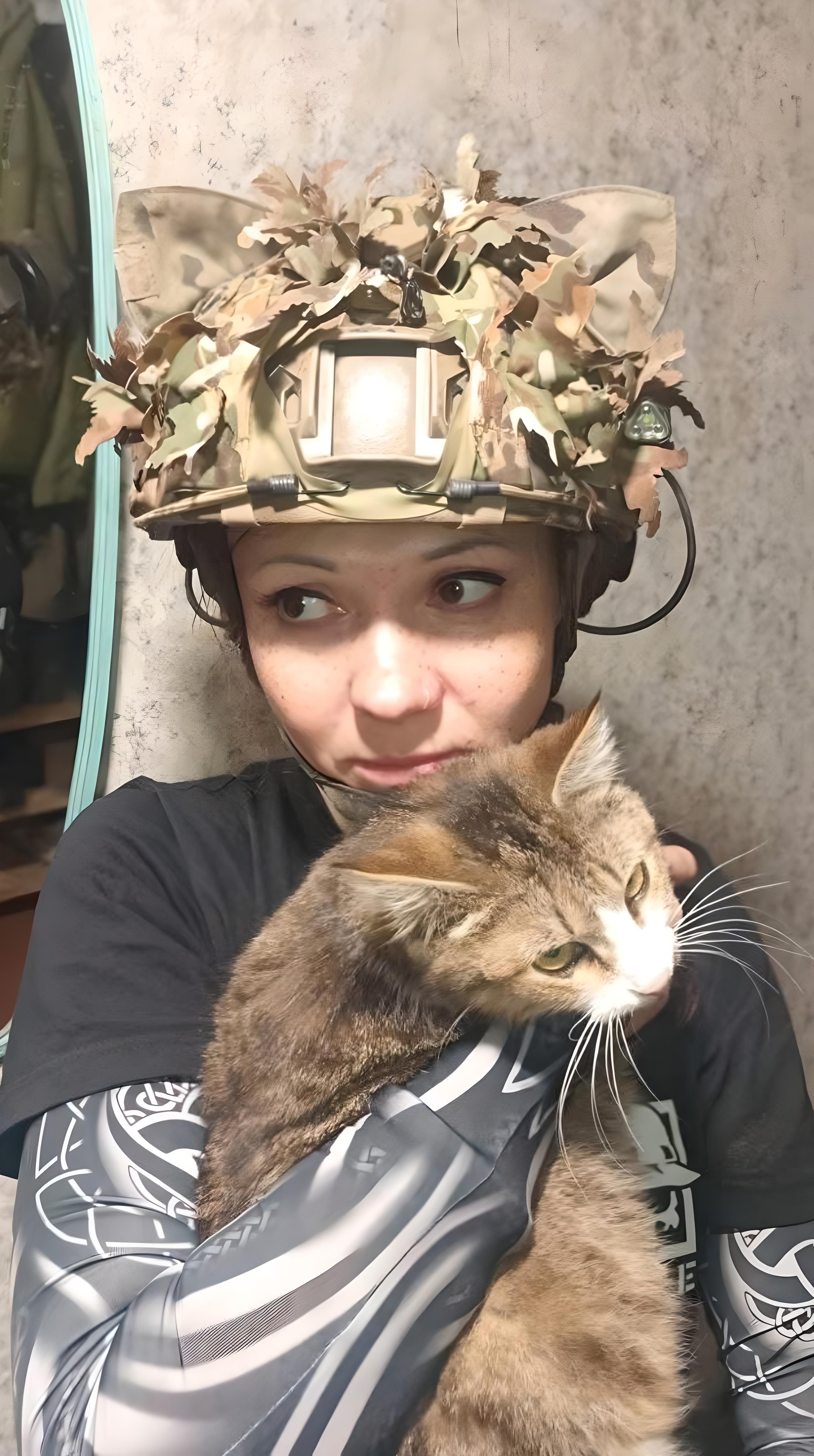
Maryna Hrytsenko.
Maryna was a fearless woman. In January 2025, President Zelensky awarded her the Order for Bravery. Yet her first heroic deed was not on the front lines, but in her native city. In February 2022, when Russian troops approached Chernihiv, most of the museum staff evacuated, fearing the city would be occupied. Their fears were justified—Chernihiv soon came under siege, cut off from Ukrainian forces.
A single mother, Maryna not only stayed in the city but moved with her child into the cellar of the museum to protect its collection from looting and destruction. She remained in the building without running water or electricity until early April, when Russian troops retreated. She received little public recognition for safeguarding the museum’s treasures throughout the horrors of the siege and constant bombardment.
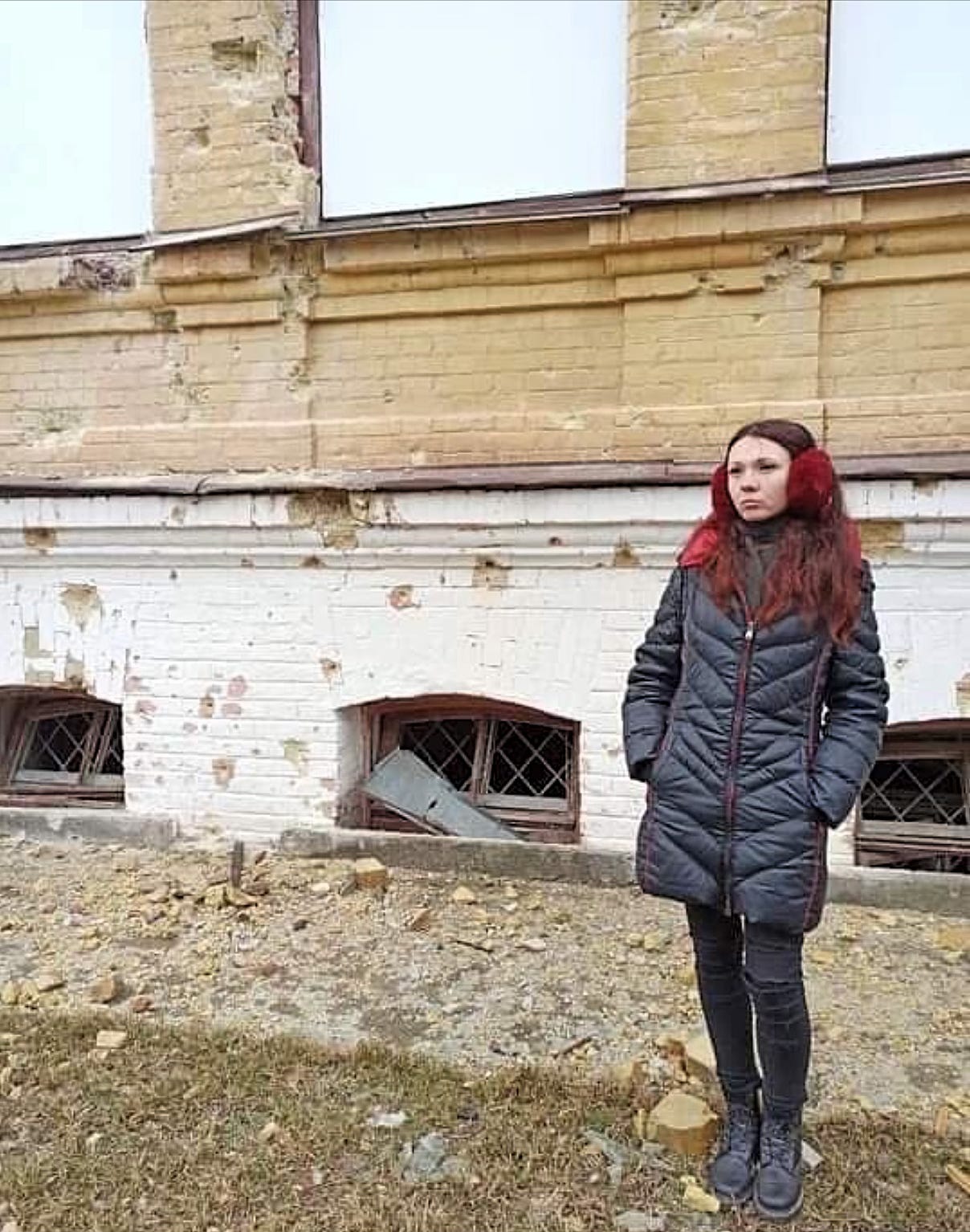
Maryna Hrytsenko in the front of the museum building. April 2022
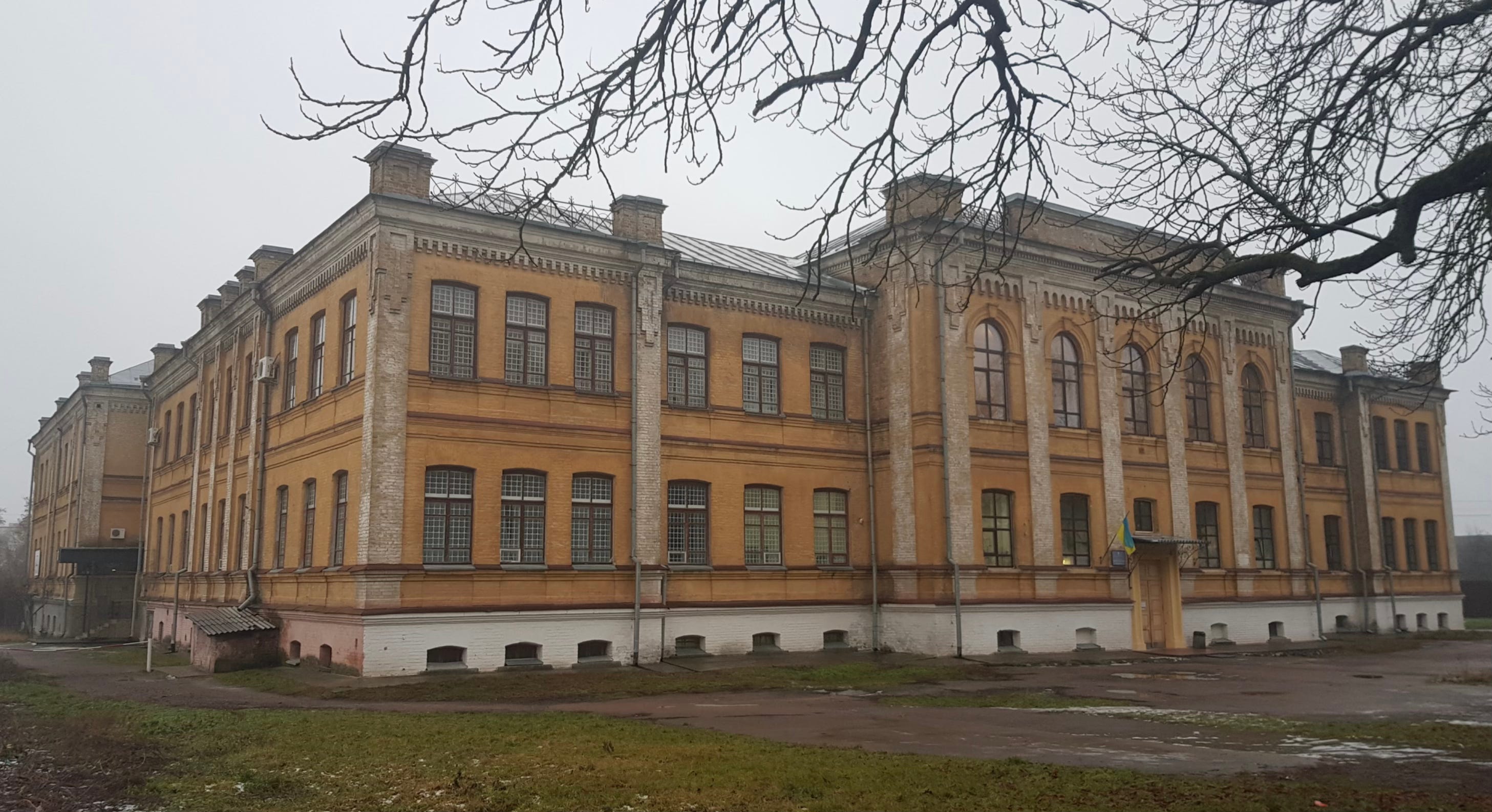
The Halahan Regional Art Museum, which Maryna singlehandedly guarded and protected from late February to early April 2022.
In 2023, she volunteered for frontline service. Now, the Ukrainian museum community is petitioning authorities to award her the title Hero of Ukraine posthumously.
Milena Chorna, a Ukrainian art historian and journalist who initiated the petition, wrote:
“If this title were awarded for museum work, she would be among the first I would have nominated back in 2022… Eternal memory.”
On August 10, in the Zaporizhzhia region, Davyd Chichkan, a well-known Ukrainian artist who served as a mortar operator, was killed during a Russian infantry assault. Chichkan was an ideological anarchist who volunteered for frontline duty to fight alongside his comrades—anarchists and anti-totalitarian socialists. He was a true political artist, distinct from many fashionable leftist trends popular in the Ukrainian contemporary art world.
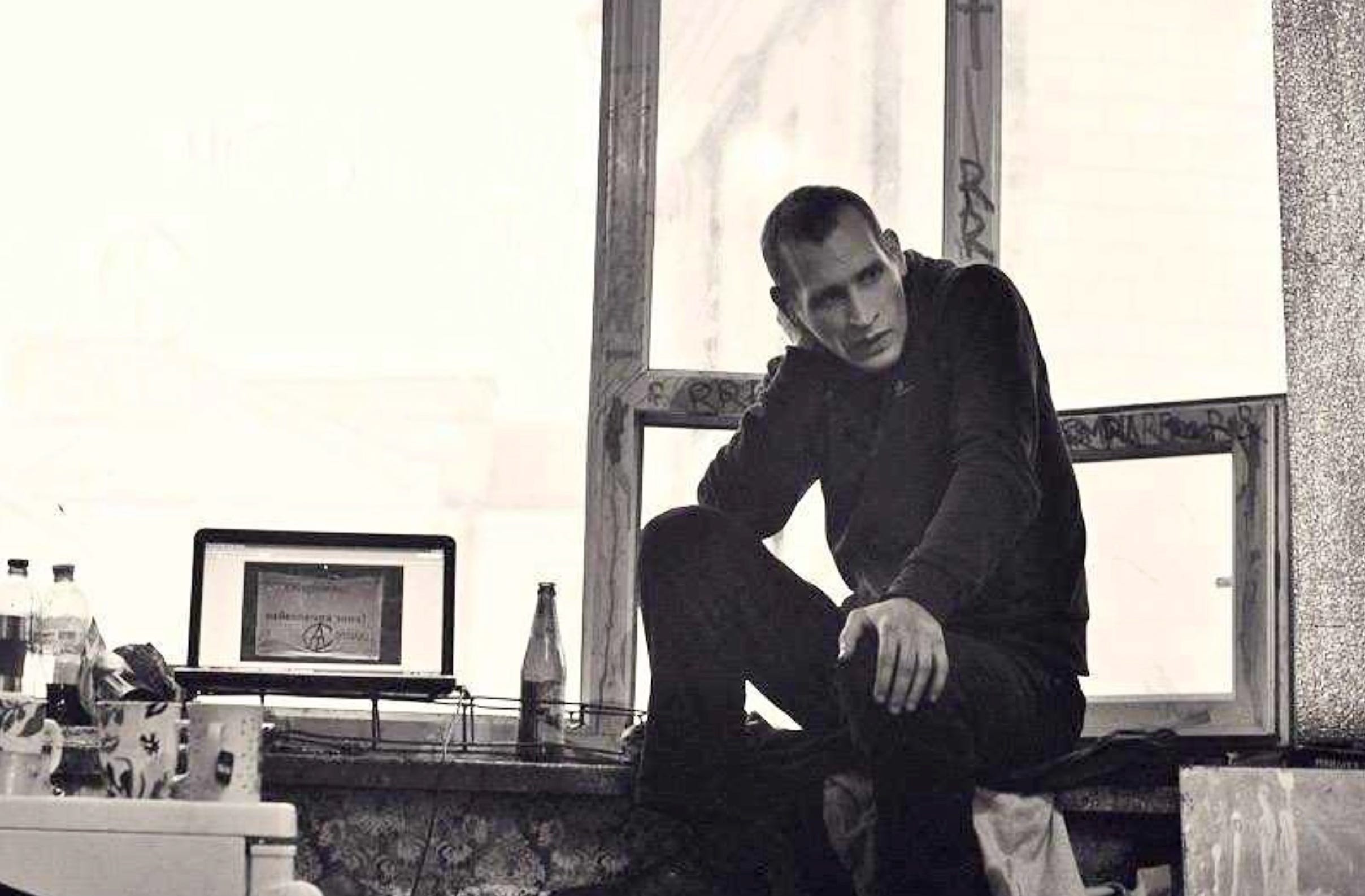
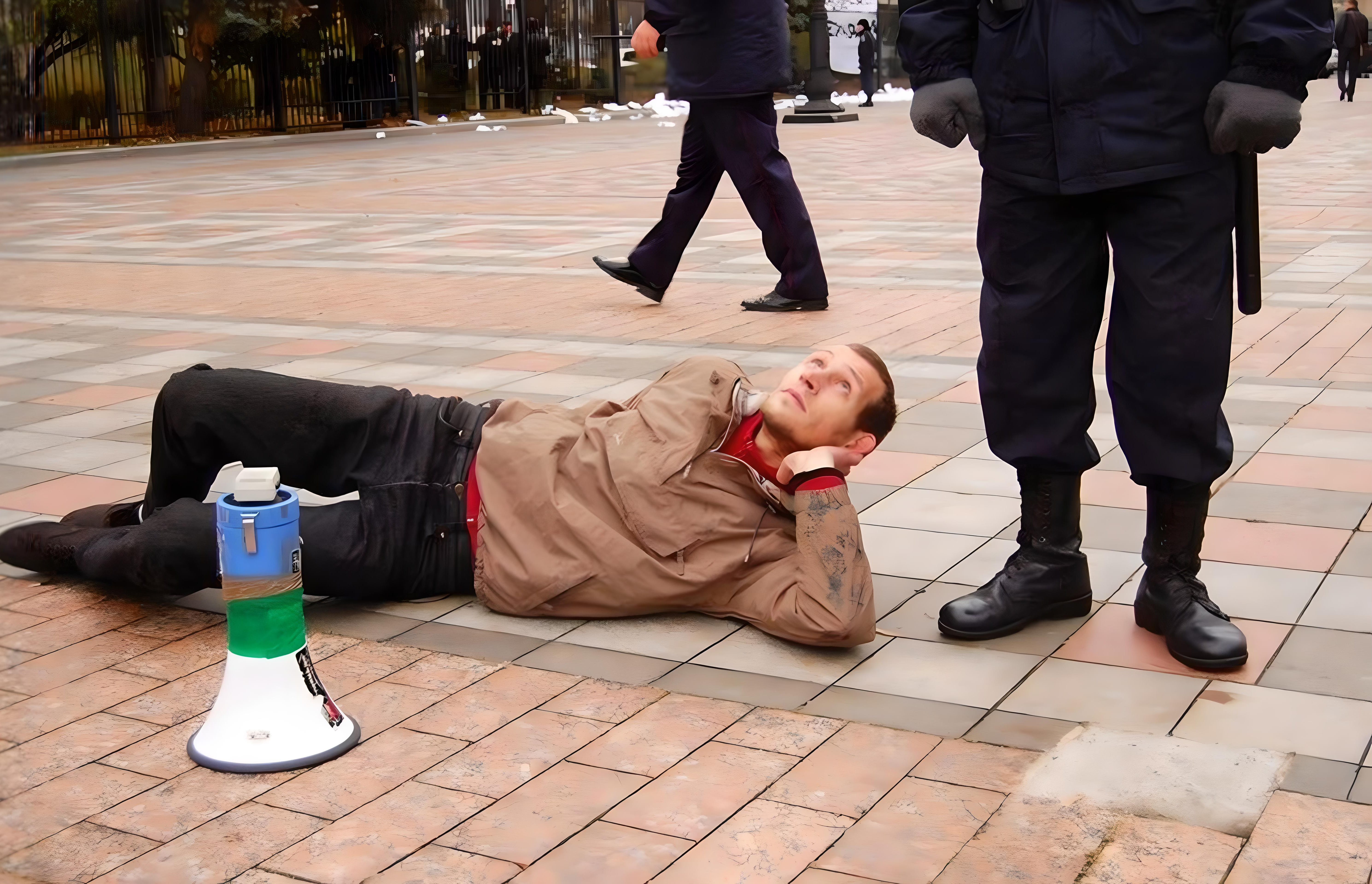
Davyd Chichkan at the protest in front of the Verkhovna Rada, the Ukrainian parliament. 2017.
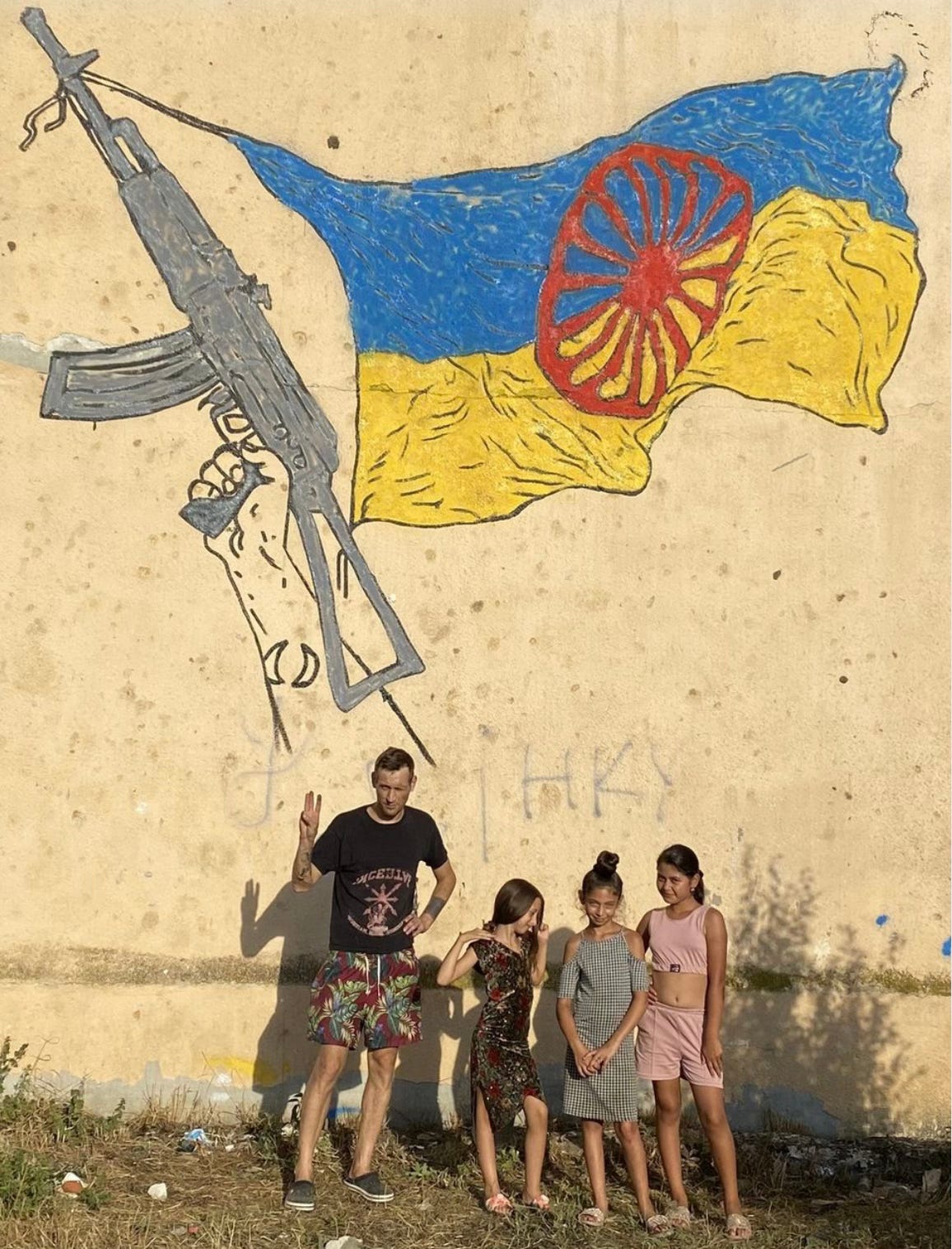
Davyd Chichkan in front of a mural dedicated to Roma fighters in the Ukrainian Army created in the Roma populated district of Uzhhorod, 2022.
Chichkan provoked fierce hatred from the Ukrainian radical right. In 2024, his exhibition at the Odesa National Art Museum, dedicated to anarchists and anti-authoritarian socialists fighting in the Ukrainian army, was canceled following anonymous threats to burn the museum. This was not the first time right-wing extremists targeted him.
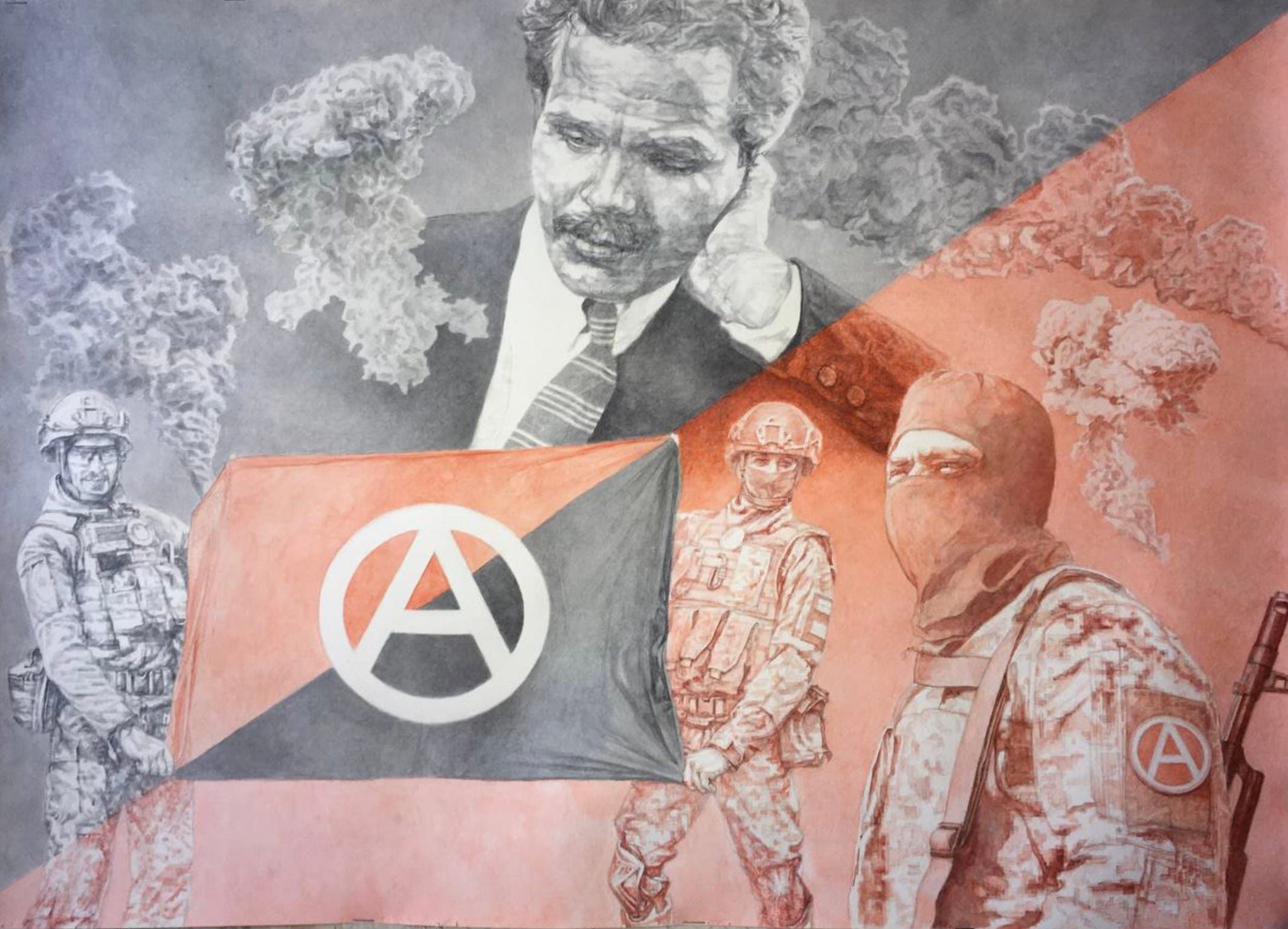
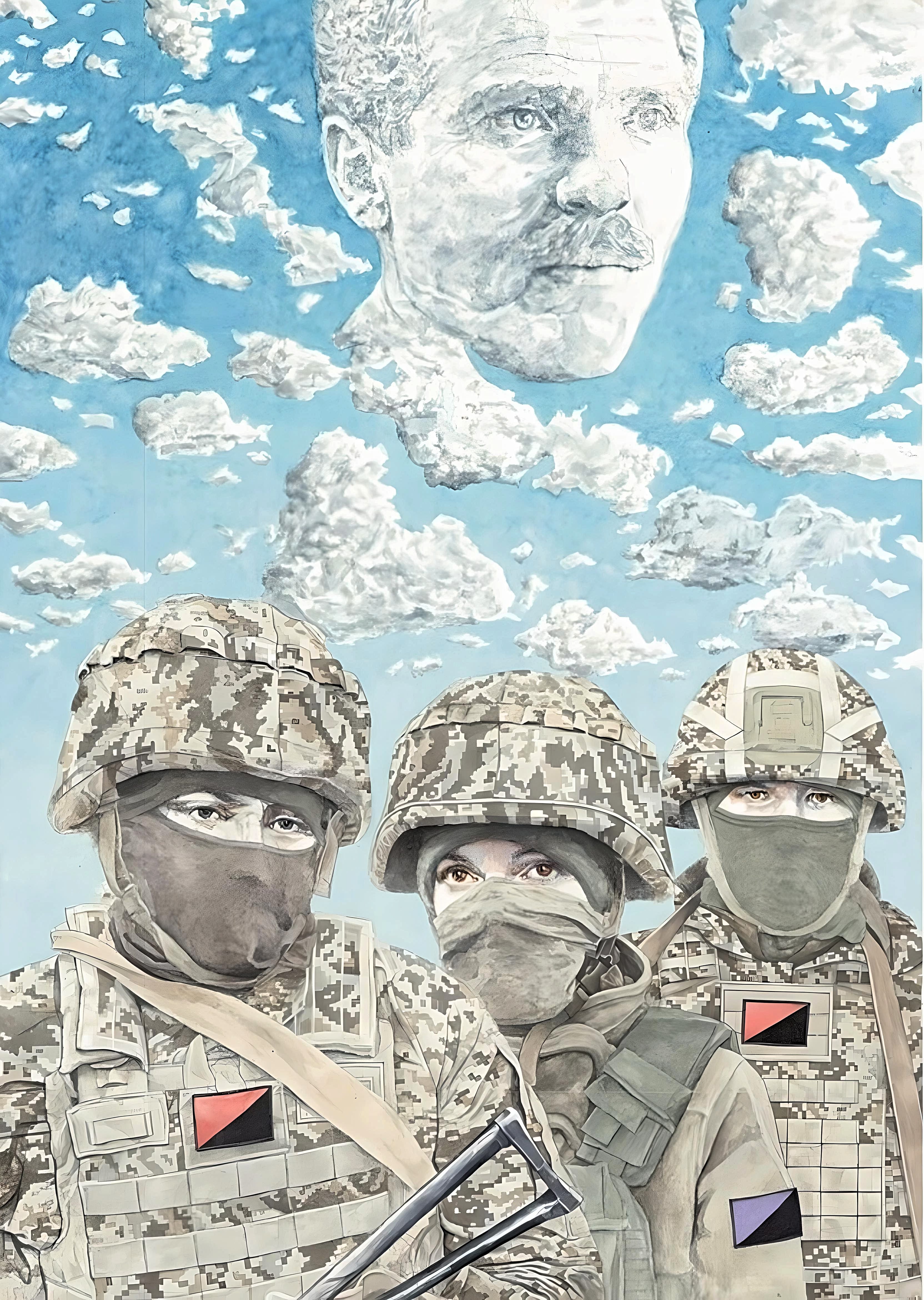
One of the works from the Odesa exhibition depicts Nestor Makhno, the leader of the Ukrainian anarchists in the 1920s, alongside Ukrainian anarchists fighting today on the front lines.
In February 2022, on the eve of the Russian invasion, his exhibition offering an alternative interpretation of history of the Ukrainian People’s Republic (the short-lived independent Ukrainian state from 1917–1921), held at the Lviv Municipal Art Center, was attacked by radical right activists. Earlier, in February 2017, the exhibition The Lost Possibility, which explored the Maidan Revolution, the decommunization campaign, and the war with Russian proxies in eastern Ukraine—organized by the Kyiv Center of Visual Culture—was assaulted by a group of balaclava-clad thugs who destroyed most artworks, stole four pieces, and spray-painted slogans on the center’s walls.
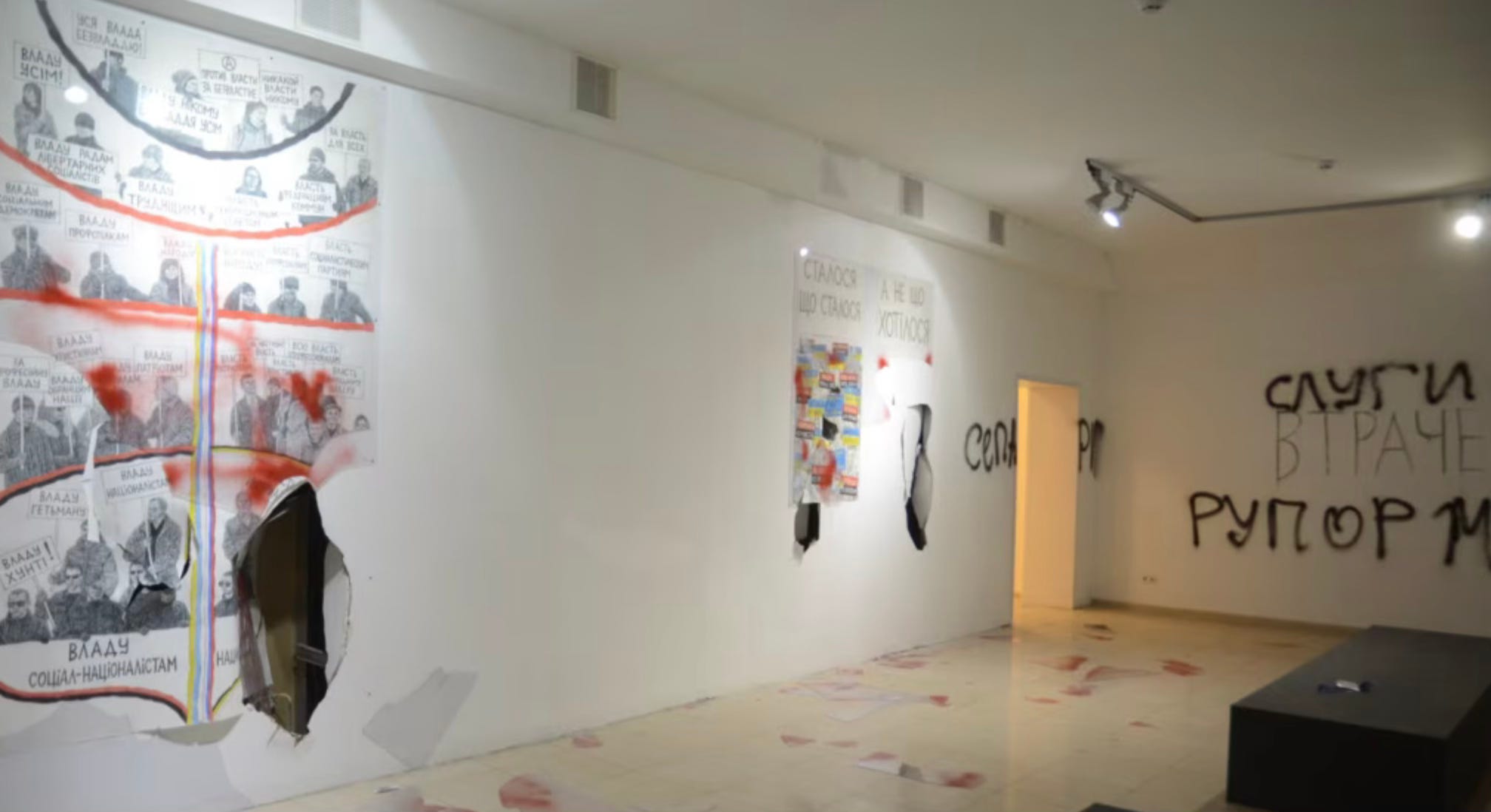
The vandalized exhibition in the Kyiv Center of Visual Culture, 2017.
This hatred is understandable given Chichkan’s focus on difficult and tragic chapters of Ukrainian history that clash with the nationalist narrative of heroic struggle for independence. One striking example is his double portrait Revenge, depicting Symon Petliura—the Supreme Commander of the Ukrainian People’s Army and leader of the Ukrainian Peoples Republic—and Sholem Schwarzbard, a Jewish anarchist who assassinated Petliura in Paris on May 25, 1926.
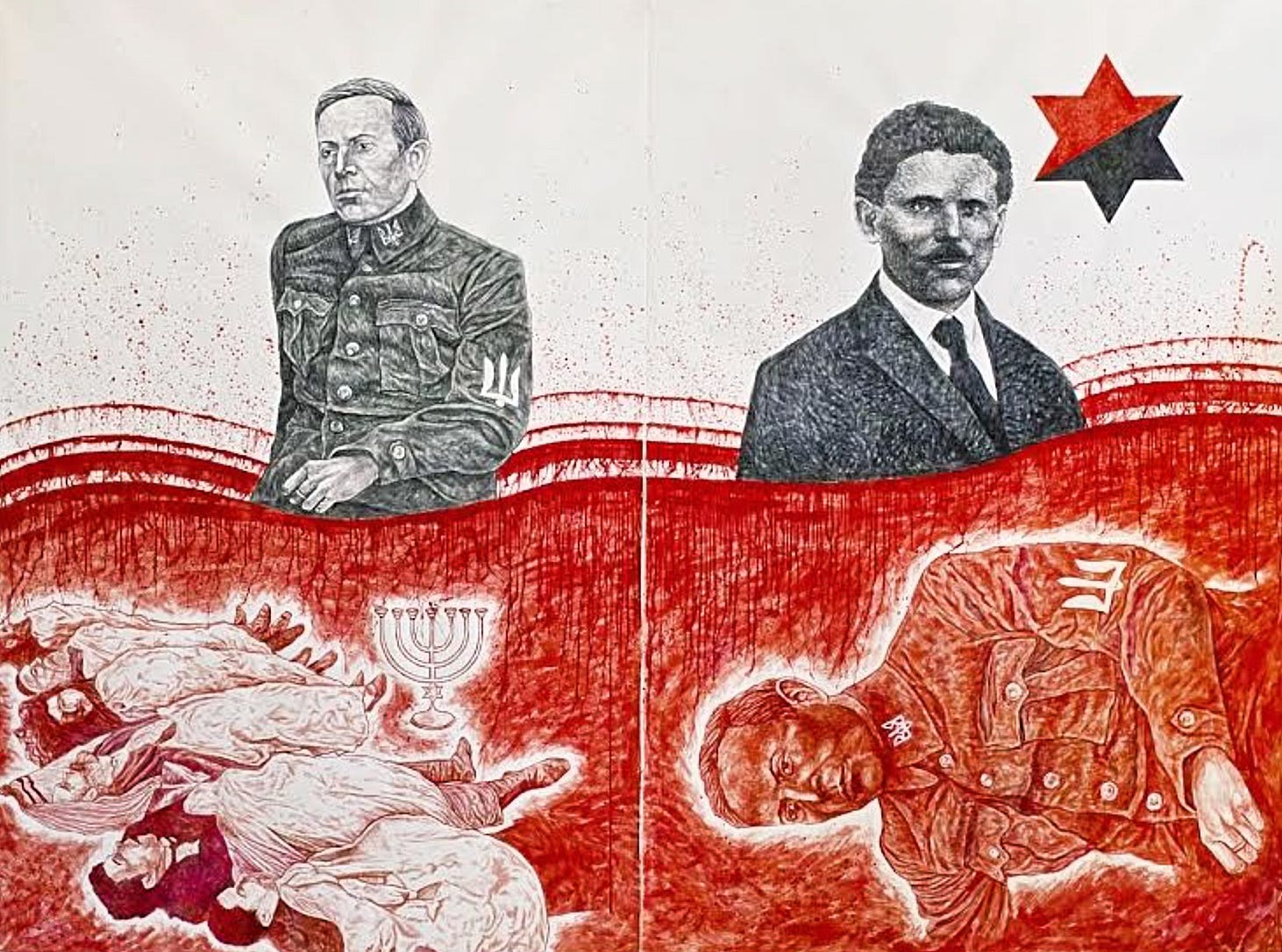
Davyd Chichkan. Revenge. 2016. Watercolor on paper.
The Ukrainian army was responsible for numerous pogroms between 1918 and 1921. While Petliura himself was unlikely an ideological anti-Semite, he was unable to control his troops. Schwarzbard’s family was killed in Odesa during one such pogrom. There is no definitive consensus on Petliura’s anti-Semitism or Schwarzbard’s possible ties to the Bolshevik secret police, but this reminder of dark chapters in Ukrainian history enraged right-wing nationalists. Attempting to protect their heroes from accusations of pogroms, they ironically used the specter of pogroms as a weapon to defend them.
Chichkan consistently highlighted the leftist traditions of the late 19th and early 20th-century Ukrainian intelligentsia, emphasizing the socialist devotion of literary classics like Ivan Franko and Lesia Ukrainka. He sought to analyze and understand the revolutionary violence of Ukrainian anarchists—figures the artist idealized to some extent.
In 2023, Chichkan, in collaboration with Mikita Kravtsov and Kateryna Piskarska, created a mural in Zaporizhzhia depicting Nestor Makhno, the leader of the Ukrainian anarchists of the 1920s. According to the artists, Makhno became a symbol of the fight against Russian imperialism.
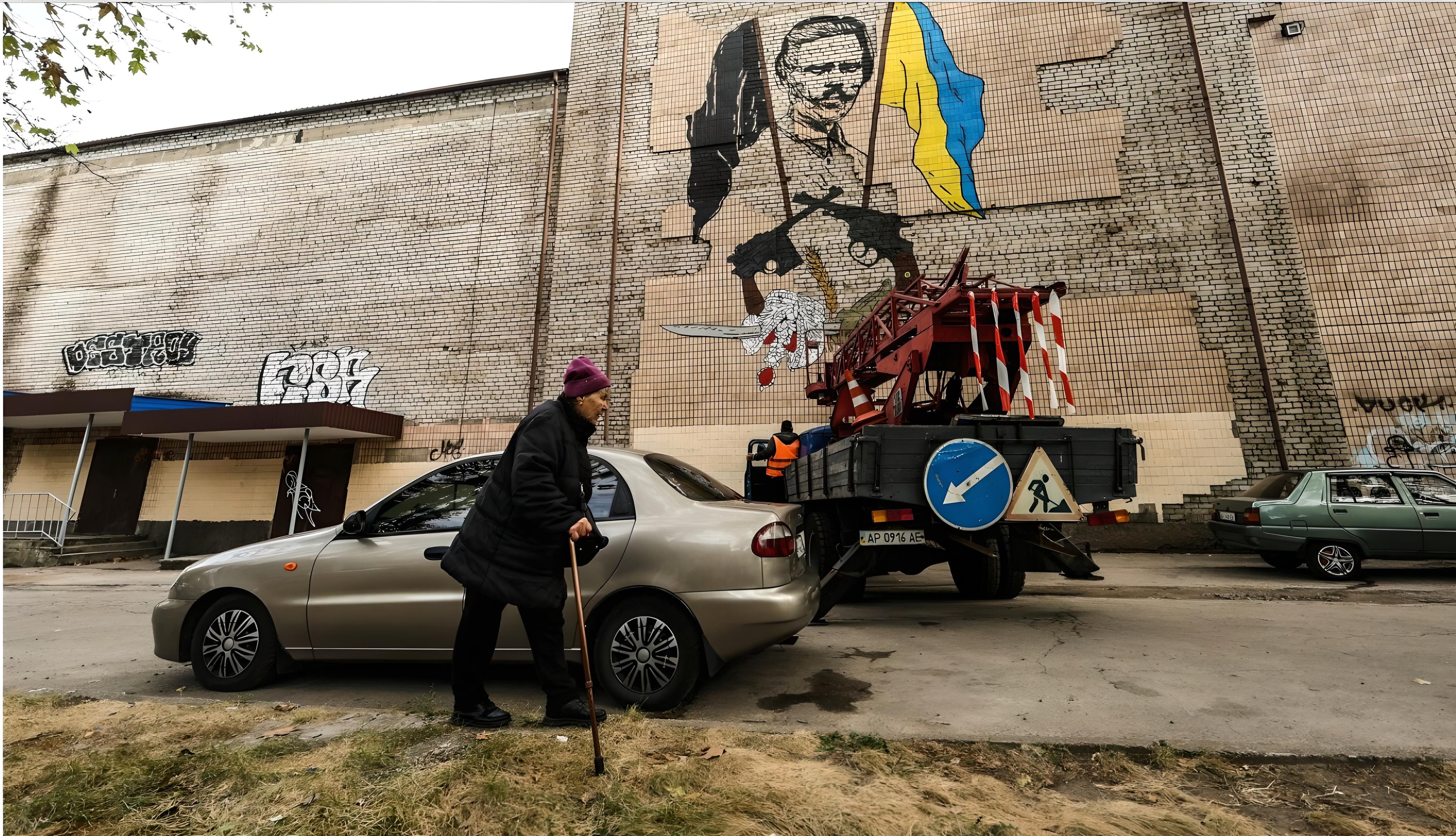
By the play of fate, Davyd Chichkan was killed in the very region of Ukraine that was the center of the bloody struggle of Ukrainian anarchists a century ago. He died like a true anarchist—fighting for freedom with arms in his hands.
(It is English translation of the article published today in FAZhttps://www.faz.net/aktuell/feuilleton/kunst-und-architektur/ukrainische-kunstwelt-marina-hrytsenko-und-david-chichkan-getoetet-110633929.html)
P.S.
Over the past three years of war, I’ve come across countless articles in North American and European media fixated on ultra-right fighters within the Ukrainian army. While it’s true they are part of the fight, the stories rarely acknowledge the anarchists and anti-authoritarian socialists who are also risking—and losing—their lives on the front lines against Russian aggression. Even more rarely do we hear about LGBTQ+ soldiers and officers who proudly wear a unicorn or a rainbow chevron, or about the subtle yet profound shift in public attitudes toward LGBTQ+ people, driven by their visible and courageous service.
It seems that many so-called “progressive socialists” in the West remain unwilling—or perhaps unable—to engage with the full complexity of Ukrainian society and the diverse struggles of its left. It’s far more comfortable to cling to simplistic, prefabricated narratives than to confront the multifaceted realities of a nation at war, where identity, ideology, and courage intersect in unexpected ways.